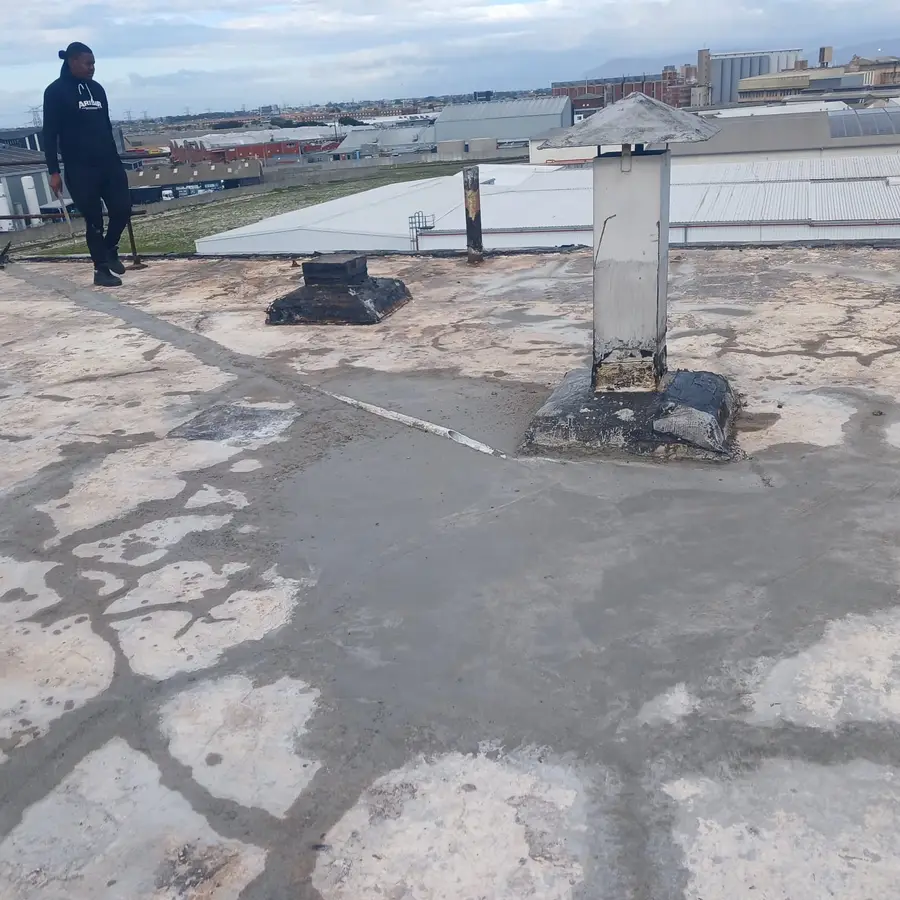
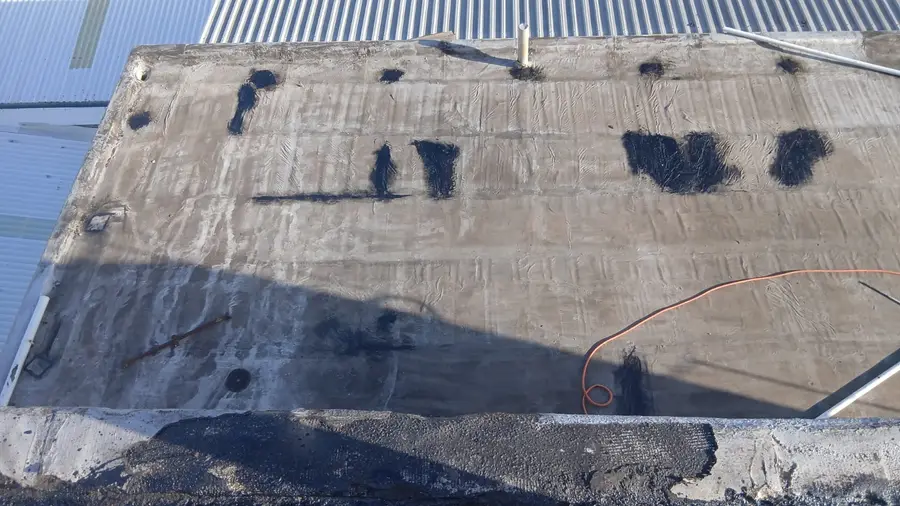
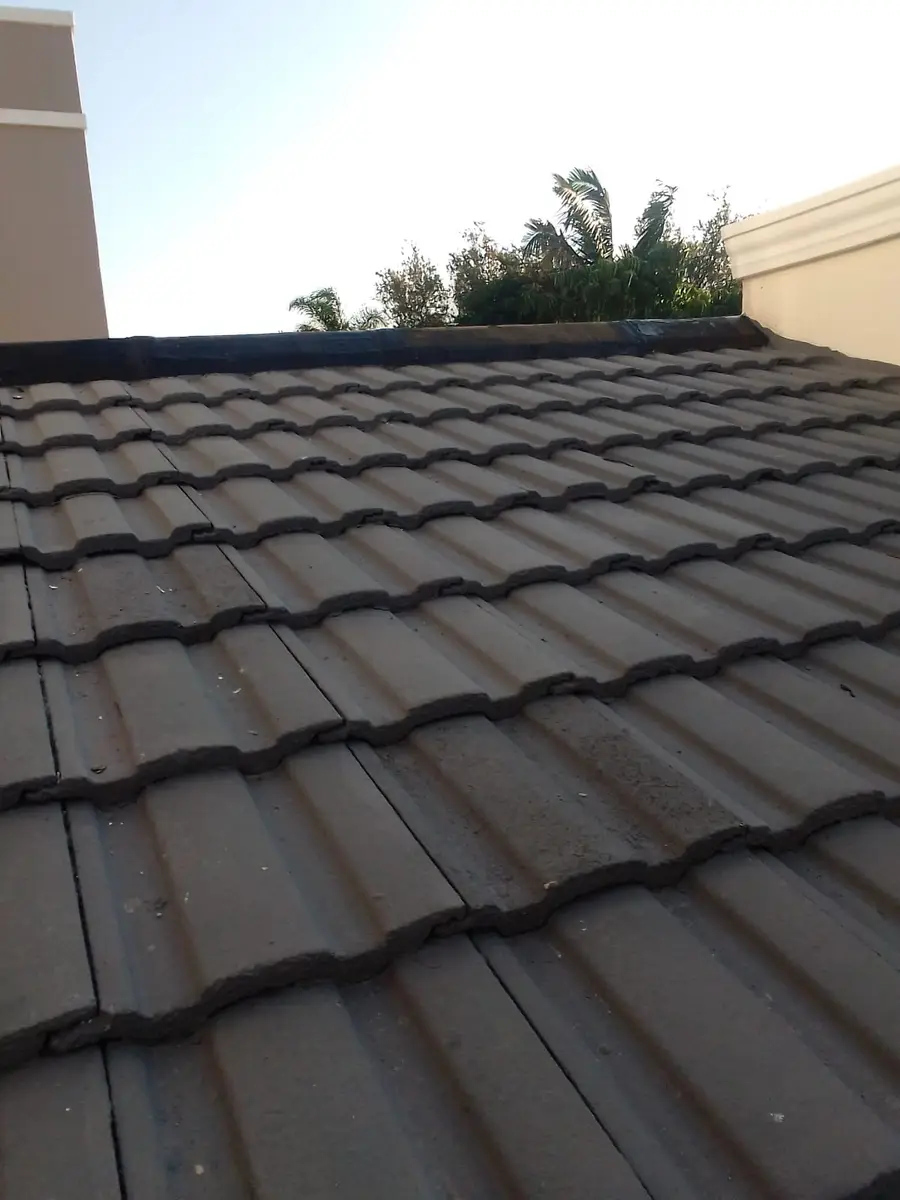
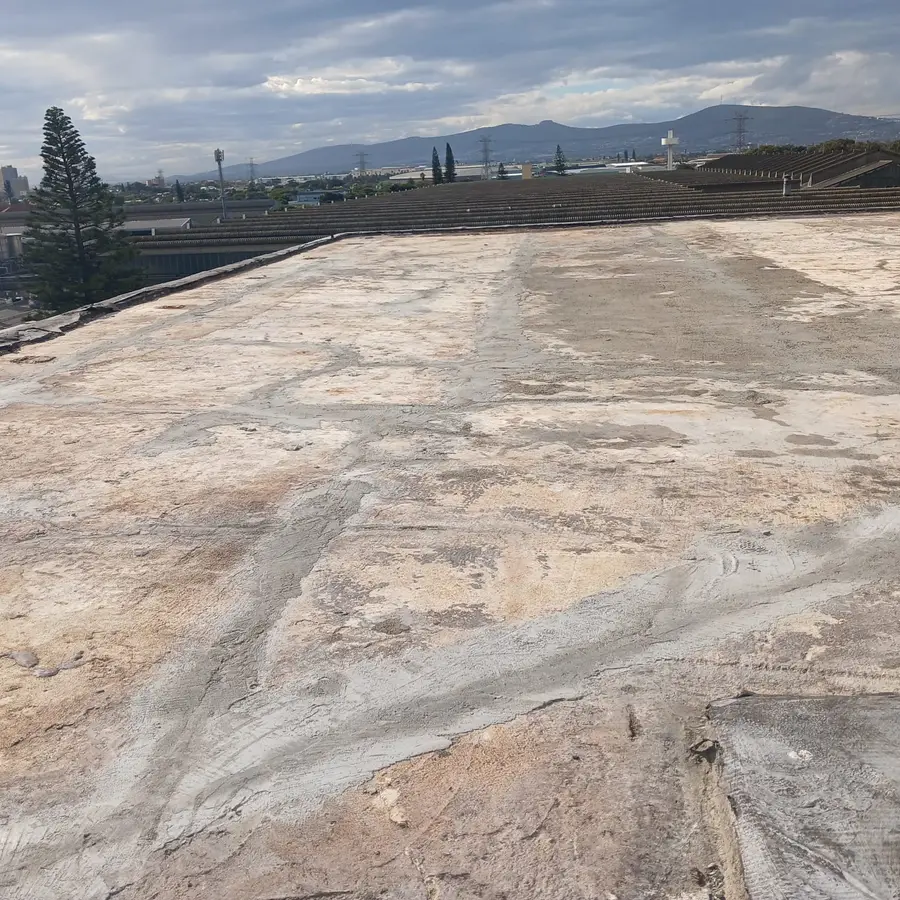
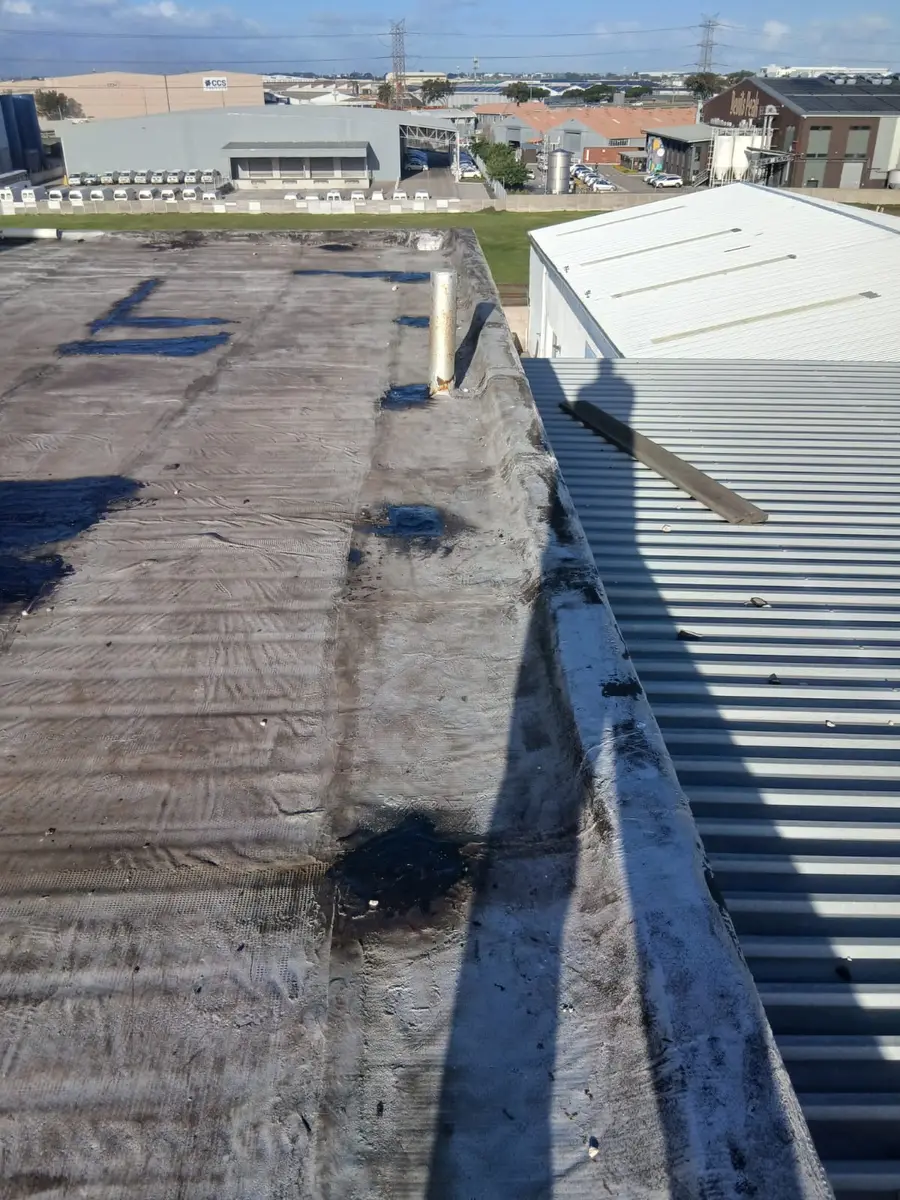
Two systems dominate Durbanville flat-roof waterproofing in 2026: heat-fused torch-on bitumen and brush-applied liquid membranes. They look completely different on the roof, cost different amounts, last different lengths of time, and behave differently under Cape Town’s specific climate. This guide compares them on the dimensions that actually matter.
Quick verdict
- Torch-on bitumen wins on lifespan and cost-per-year, especially on simple flat roofs with good access.
- Liquid polyurethane wins on complex shapes, tight access, parapet detailing, and where the roof has multiple penetrations (vents, antennae, solar).
- Liquid acrylic wins on budget refreshes — good 8–12 year cover at half the price.
The systems
Torch-on bitumen
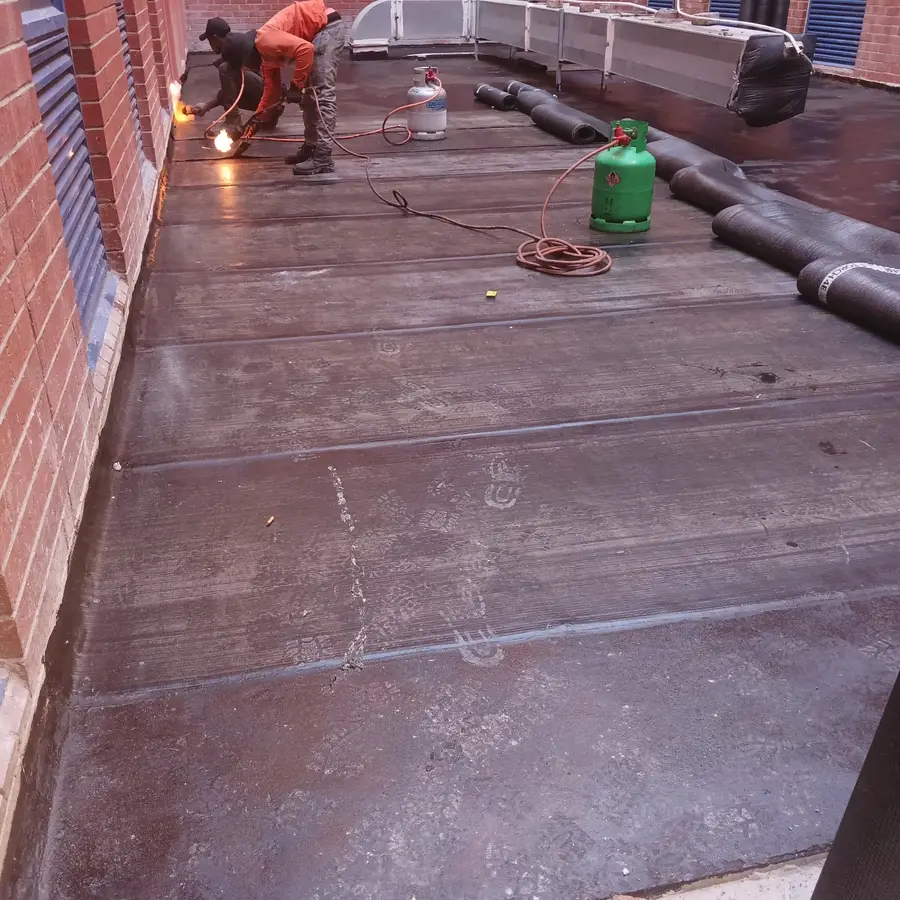
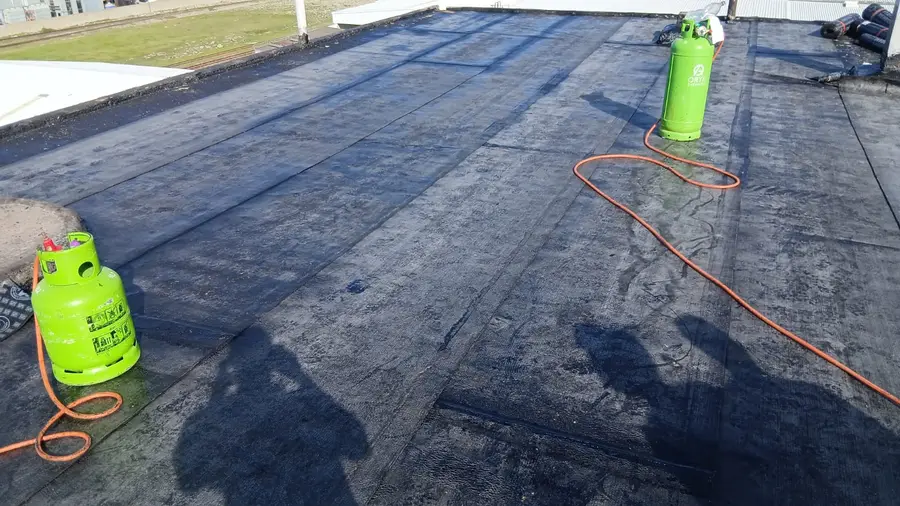
A roll of polymer-modified bitumen membrane (typically 4mm thick) is unrolled across the roof and heated with a propane torch as it goes. The bitumen melts at the underside of the roll, fusing the membrane permanently to the substrate. Overlapping joins are heat-welded together. The dominant SA brands are Index, Derbigum and Sika.
Liquid membrane (polyurethane)
A two-part liquid (resin + hardener) is mixed on-site and rolled or brushed across the prepared roof. It cures into a continuous elastomeric film typically 1.5–2.5mm thick. The dominant SA brand is Sikalastic, with Mapei and Plascon also widely used.
Liquid membrane (acrylic)
A water-based acrylic emulsion brushed or rolled in 2–3 coats. Cheaper and easier than polyurethane but with shorter life. Good for budget refreshes or as a topcoat over an existing membrane that’s still sound.
Side-by-side
| Dimension | Torch-on | Polyurethane liquid | Acrylic liquid |
|---|---|---|---|
| Cost per m² (2026) | R220–R380 | R350–R550 | R150–R260 |
| Lifespan | 15–20 yr | 15–25 yr | 8–12 yr |
| Cost per year per m² | R12–R25 | R14–R37 | R12–R32 |
| Application weather window | Dry, no wind | Dry, 5–35°C | Dry, 10–30°C |
| Substrate prep | Primer + repair | Primer + crack bridging | Light prep, primer |
| Foot traffic | Light only | Light only | Light only |
| UV resistance | Needs reflective topcoat | Inherent UV stable | UV stable for life of system |
| Best for | Big simple flat roofs | Complex shapes, parapets, balconies | Budget refresh, secondary roofs |
Cape Town climate considerations
Cape Town’s climate punishes roof membranes in three specific ways:
UV intensity
Western Cape summer UV is among the highest in the world. Bare bitumen oxidises and cracks within 5–7 years if not topcoated. Most modern torch-on systems use a mineralised top layer (granular finish) or a separate aluminium-bitumen topcoat (“silver-aluminium”) to deflect UV. Polyurethane and acrylic liquids are inherently UV-stable from day one.
Wind-driven rain
Cape winter cold fronts bring rain at near-horizontal angles. Joints and seams matter more than membrane thickness. Torch-on bitumen with heat-welded overlaps wins here — the seam IS the membrane. Liquid membranes also win because there are no seams at all.
Thermal cycling
Cape roofs see 40–50°C of thermal range across a 12-month cycle. Concrete roofs expand and contract; timber and IBR roofs flex. The membrane has to follow the substrate. Polyurethane wins here — it’s the most elastic. Torch-on bitumen flexes adequately if installed with a primer that promotes adhesion. Acrylic is the least elastic and tends to crack along expansion joints first.
When you should pick which
Pick torch-on bitumen if…
- You have a flat or slightly sloped concrete roof bigger than 50 m² with good access
- The roof has few penetrations (no vents, antennae, AC condensers)
- You want maximum lifespan per rand spent
- The contractor is an Index or Derbigum approved applicator
Pick polyurethane liquid if…
- The roof is complex — multiple levels, parapets, geyser plinths, AC condensers
- Access is difficult (no roof crane, narrow stair access)
- You’re waterproofing a balcony or a small flat roof under 30 m²
- Aesthetics matter — the finish can be coloured (light grey is most common)
- The contractor is a Sikalastic, Mapei or Plascon approved applicator
Pick acrylic liquid if…
- You’re refreshing an existing torch-on or polyurethane that’s still sound
- Budget is tight and you can accept a 10-year horizon
- The roof is a secondary structure (carport, shed, garden room)
What separates a 20-year job from a 5-year job
System choice matters less than installation quality. A R450/m² polyurethane installed badly fails in 3 years; a R260/m² torch-on installed well lasts 18. The difference comes down to:
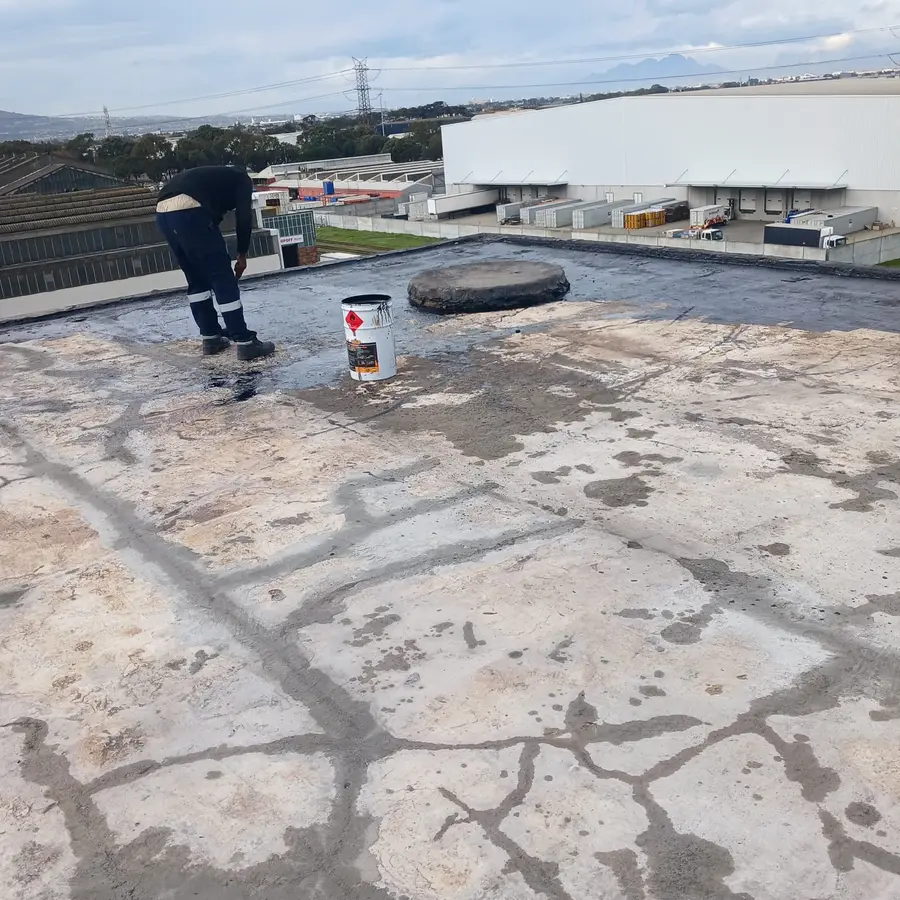
- Surface prep. Pressure-cleaning, repair of cracks, removal of old failed coatings. If the contractor doesn’t budget for it, walk away.
- Primer. Each system has its own primer. Skipping it cuts 60% off membrane life.
- Application thickness. Liquids need a wet film thickness gauge to verify coats. Torch-on needs even fusing without holidays.
- Detailing. Parapets, penetrations, drains and joints are where membranes fail. They need the same attention as the field.
Submit a free roof waterproofing quote and a vetted Durbanville specialist will assess your roof and recommend the system that actually fits — not the system with the highest margin.
Need a free on-site quote?
Up to 3 vetted Durbanville waterproofing specialists will contact you within 24 hours to book a free no-obligation inspection.
Frequently asked questions
Which lasts longer — torch-on or liquid waterproofing?+
Polyurethane liquid membrane lasts longest at 15-25 years if installed by an approved applicator. Torch-on bitumen lasts 15-20 years. Acrylic liquid lasts 8-12 years. All three depend more on installation quality and substrate prep than on raw product choice.
Is torch-on or liquid waterproofing more expensive?+
Polyurethane liquid is the most expensive at R350-R550/m² in 2026. Torch-on bitumen sits in the middle at R220-R380/m². Acrylic liquid is cheapest at R150-R260/m². On a cost-per-year basis, torch-on usually wins on simple roofs and polyurethane on complex ones.
Can I apply liquid waterproofing over torch-on?+
Yes — liquid acrylic and some polyurethane systems are designed as topcoats over existing bitumen membranes. The bitumen must be sound (no blisters, alligatoring or detachment) and clean. This approach extends life by 8-15 years at a fraction of the cost of full strip-and-restart.
Why does torch-on need a topcoat in Cape Town?+
Western Cape UV is intense. Bare bitumen oxidises and cracks within 5-7 years if not protected. The two standard solutions are a mineralised top layer (granular finish — built into the membrane) or a separate aluminium-bitumen “silver-aluminium” topcoat applied over the membrane. Either way, UV protection is non-optional.